
Student Life in Your City: The Local's Guide for International Students

The Student Life runs an honest, local guide for every city we cover, from Tokyo to Lisbon to Krakow. Each city page lays out the real monthly student budget in local currency (think around ¥150,000 in Tokyo, €900 to €1,300 in Lisbon, around 3,000 zl in Krakow, £1,600 in London), the best neighbourhood to live in, the nightlife, the universities and the per-city WhatsApp community you can join the day you arrive. Pick your city, read its guide and meet your people at the Welcome Festival.
Moving abroad to study is thrilling right up until the moment you realise you have no idea what a fair rent looks like, which neighbourhood is actually fun, or where the other internationals are hiding. Generic "study abroad" advice does not help, because student life is not generic. It is intensely local. The rent that feels normal in Krakow would be a steal in London, and the night out that ends at 2am in Lisbon is barely warming up by Berlin standards.
So we built a proper guide for every single city we cover. Not a tourist listicle, not a brochure, but the honest, student-to-student rundown a friend who already lives there would give you. This page is the map to all of them. Here is what each city guide covers, a few examples to get you started, and how to find yours.
What does each TSL city guide actually cover?
Open any city page and you get the same honest breakdown, tuned to that specific place. We are not interested in the glossy version. We want you to land knowing roughly what life costs and where to point yourself. Every guide covers:
- The real monthly budget: what a student actually spends per month, plus typical rent for a room and for a whole flat, all in the local currency.
- Neighbourhoods: the one area we would tell a mate to live in, and why. Central enough, affordable enough, and full of other students.
- Day-to-day prices: coffee, beer, dinner out, a monthly transport pass, mobile data. The small numbers that decide whether you can actually afford to have a life.
- Nightlife and the social scene: where people go out and what the vibe is, from ruin bars to beach clubs to techno warehouses.
- The universities: the main institutions in the city, so you can see who your future classmates and flatmates will be.
- The WhatsApp community: a live, per-city group chat full of students who are already there. This is the bit that turns a guide into a social life.
Browse the full list on the cities map, or jump into a few of our favourites below.
What does student life cost across our cities?
The single biggest question we get is "how much do I actually need per month?" The honest answer is that it depends entirely on the city, which is exactly why every guide quotes its own figure in its own currency. Here is a snapshot so you can see the spread before you pick.
| Budget / mo | Room | Transport | Coffee | Beer | |
|---|---|---|---|---|---|
| Krakow | 3,000 zl | 1,500 zl | 99 zl | 14 zl | 13 zl |
| Lisbon | €900 to €1,300 | €400 to €600 | €40 | €1 | €2 to €4 |
| Berlin | €1,400 | €550 | €58 | €3.50 | €4 |
| Tokyo | ¥150,000 | ¥60,000 | ¥10,000 | ¥450 | ¥550 |
| London | £1,600 | £950 | £171 | £3.50 | £6.50 |
| Copenhagen | 12,000 kr | 5,000 to 7,000 kr | 480 kr | 45 kr | 55 kr |
Figures are in each city's local currency, so read each row on its own terms rather than comparing the raw numbers across rows. Krakow and Lisbon sit at the affordable end, Tokyo and Berlin in the comfortable middle, and London and Copenhagen at the premium end. Every city page breaks this down further, including the gap between a student budget and what locals and expats spend.
Which cities should I look at first?
We cannot fit every city on one page, so here are two crowd favourites to show you the range. One is famously cheap and lively, the other is the world's biggest student city.
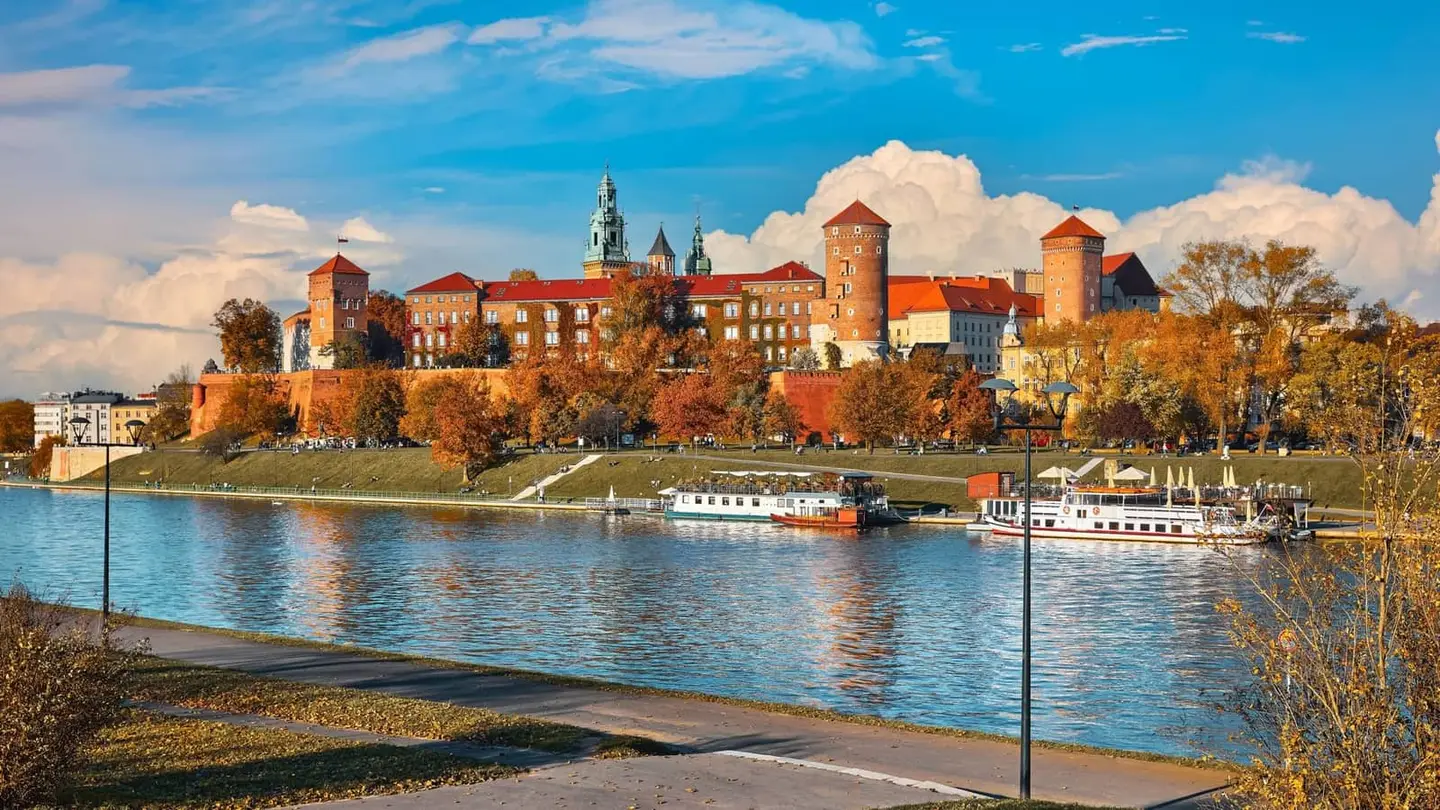
🇵🇱 Krakow
- Student budget: around 3,000 zl / month
- Live in: Kazimierz, the old quarter full of cheap bars and cafes
- Students: more than 130,000, led by the historic Jagiellonian University
- Why students love it: a famously cheap, lively scene with a beer at around 13 zl
🇯🇵 Tokyo
- Student budget: around ¥150,000 / month
- Live in: Takadanobaba, an affordable hub around Waseda with great transport
- Students: more than 700,000, the largest student community in Japan
- Why students love it: hyper-organised, safe and somehow always up for fun
Want more options? A few others worth opening: Barcelona for beach-meets-bohemian energy and the village feel of Gràcia, Lisbon for sunshine and value around Arroios, Berlin for its anything-goes creative scene in Friedrichshain, Budapest for ruin bars in the Jewish Quarter, Vienna for culture with a social side, and Copenhagen for cycling, hygge and Nørrebro. Big or expensive does not mean off-limits either: London, Milan and Zurich all have full guides too.
How do I find the right neighbourhood?
This is where local knowledge beats a property search every time. The "best" area for a student is rarely the most famous one. It is the one that is central enough to walk home from a night out, cheap enough that you can still eat, and full of other students. Every guide names ours.
- Tokyo: Takadanobaba, lively and affordable around Waseda, packed with cheap eats and study cafes.
- Barcelona: Gràcia, a village-like grid of plazas, cafes and a strong international crowd.
- Berlin: Friedrichshain, all shared flats, cheap food and nightlife around Boxhagener Platz.
- Lisbon: Arroios, central and multicultural with cheaper rents than the historic core.
- Krakow: Kazimierz, the old Jewish quarter, for bars, cafes and a short walk to the centre.
When it comes to actually booking a room, do it through people who specialise in student housing rather than a random listing. For most cities we point you to Socials Homes, our sister brand. If you are heading to Budapest, look at Fuse Stays instead, who run all-inclusive student co-living there.
Where does the WhatsApp community come in?
A guide tells you where things are. The community tells you who to go with. Every TSL city has its own WhatsApp group full of students who are already on the ground, swapping flat leads, sharing which night is worth leaving the house for, and organising the kind of spontaneous plans that turn a new city into home. You can join your city's group the moment you decide where you are going, long before you land.
It builds towards the Welcome Festival, our flagship event in each city at the start of the semester. It is a few days of parties, mixers and city activities designed to do one thing: make sure you arrive with a friend group instead of spending your first month eating alone. The festival, tickets and the semester pass all live on your city's page, which is exactly why finding your city is step one.
What do students get wrong about a new city?
The classic mistakes are almost always the same, and all of them are avoidable.
- Budgeting in the wrong currency, in their head. A "cheap" rent in your home currency can be brutal once converted, and a scary number can be totally normal locally. Read the figure in the local currency, the way a local would.
- Choosing a neighbourhood for the postcard, not the life. The prettiest historic centre is often the priciest and the least studenty. The fun lives one tram stop out.
- Waiting until they arrive to make friends. The students who settle fastest join the community and lock in the Welcome Festival before they fly, so the social life is already running when they land.
- Trusting one generic blog for every city. Advice that works for Lisbon falls apart in Copenhagen. Use the guide for the actual city you are moving to.
Get those four right and the hardest part of moving abroad, the loneliness of the first few weeks, mostly disappears.
Find your city
Open your city's guide for the real numbers, the best neighbourhood and the WhatsApp community, then meet your people at the Welcome Festival.
Find your city See TokyoFrequently asked questions
What does the TSL guide for my city include?
Every city guide covers the real monthly student budget in local currency, typical rent for a room and a flat, the best neighbourhood to live in, day-to-day prices like coffee, beer and transport, the nightlife scene, the main universities, and the per-city WhatsApp community you can join straight away.
How much does student life cost per month?
It depends heavily on the city. As a student you are looking at around 3,000 zl in Krakow, 900 to 1,300 euro in Lisbon, 1,400 euro in Berlin, around 150,000 yen in Tokyo, 1,600 pounds in London and around 12,000 kr in Copenhagen. Each city page quotes its own figure in its own currency.
Which city has the best value for students?
At the affordable end, Krakow sits around 3,000 zl a month and Lisbon around 900 to 1,300 euro, both with lively, cheap student scenes. Budapest is another strong value pick. London, Zurich and Copenhagen are the premium end. Open each city guide to compare on its own terms.
How do I join the WhatsApp community for my city?
Find your city on the cities map, open its guide, and the WhatsApp community is right there. You can join before you even arrive so you land with flat leads, plans and people already lined up.
How do I get to the Welcome Festival?
The Welcome Festival, tickets and the semester pass all live on your city's page, so the first step is always to find your city. Pick it from the cities map, open the guide, and everything for that city's festival is there.